Blog 9 min read
Documents needed for Spain regularization 2026
A practical checklist of documents for Spain regularization 2026: identity, cutoff-date proof, continuity, criminal records and vulnerability proof when needed.
In this article
- Five blocks, one coherent story
- Identity: can anyone tell these papers are yours?
- Proof you were here before January 1, 2026
- Proving you stayed
- The block most likely to slow you down: criminal records
- What else you need depending on your situation
- If your case is work-based
- If your case is family-based
- If your case relies on vulnerability or international protection
- How to organize your folder
- Common mistakes
- Prepare first, file second
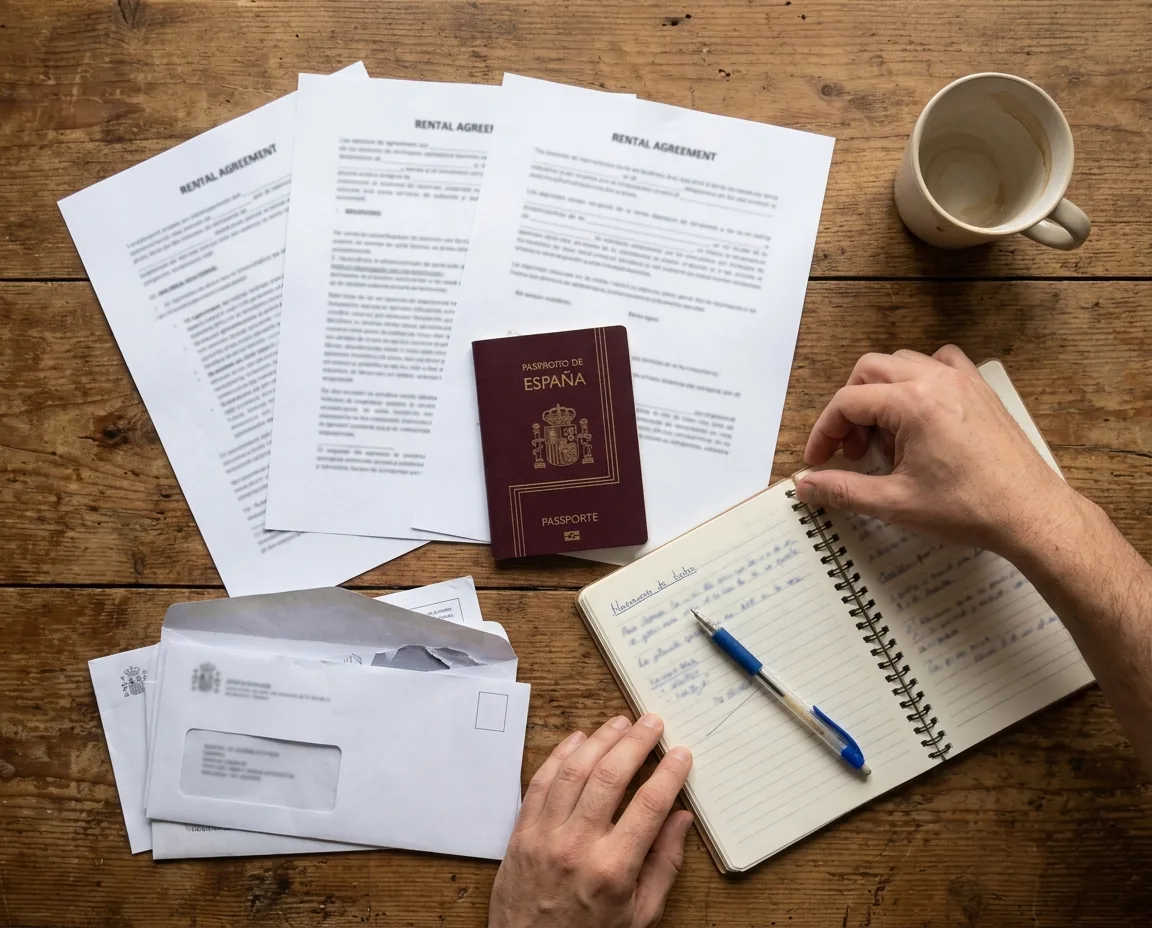
If you’re building your file, start here: the 2026 regularization runs on documents that tell one consistent story. Your case has to look clear even to someone who doesn’t know you and opens your file for only a few minutes.
Five blocks, one coherent story
Most files rest on five documentary blocks:
- Identity
- Proof that you were in Spain before January 1, 2026
- Proof of uninterrupted stay in the previous months
- Criminal records
- The documents linked to the route you’re using
Separating them this way helps. Since the process actually opened, what slows files down is often not a lack of papers. It is having them mixed together.
Identity: can anyone tell these papers are yours?
The question here is simple: can the Administration clearly understand that all these documents belong to you?
Typical documents include:
- passport, even if expired
- registration certificate or equivalent identity substitute
- recognized travel document
- any supporting document that helps align name, surname or date of birth across records
This looks basic, but it fails more often than people expect. One accent mark missing, one second surname that appears only in some documents, one transliteration difference, all of it can create avoidable doubt.
If your documents do not spell your name exactly the same way, do not ignore it. Fix that story from the beginning.
Proof you were here before January 1, 2026
This block has one specific job: proving you were already here before the cutoff date. Living in Spain now does not fix this point.
Useful evidence often includes:
- passport entry stamp
- named flight ticket
- rental contract
- municipal registration
- medical record
- Spanish bank statements
- money transfer records
- school or course registration
- other named documents tied to dates and place
Not all of them carry the same weight. A municipal registration or a clear contract is usually stronger than a blurry ticket. But several modest documents can still support the block if they point to the same place and the same period.
Proving you stayed
The stay block takes the most manual work. Proving entry is one thing; demonstrating you remained month by month is what makes or breaks most continuity stories.
Think of it as a monthly timeline. Ideally, each month should have two clear anchors:
- municipal registration or related updates
- healthcare records
- Spanish bank activity
- salary slips or work records if applicable
- rental papers, bills or utilities
- school or healthcare documents for children if they support family continuity
One weak paper can be managed. A whole month with nothing at all is what really hurts.
The block most likely to slow you down: criminal records
If you are going to prioritize one thing right now, prioritize this. Since the procedure opened, this is where many delays are gathering.
Criminal-record requirements often include:
- checks in Spain, usually handled by the Administration
- the certificate from your country of origin
- and in some cases, certificates from other countries where you lived during the five years before entering Spain
On top of that, the foreign certificate needs the right official format, plus legalization and translation when required.
The decree also left an exceptional route for cases where you requested the certificate and one month passed without a response. In that situation the file can move into a diplomatic request path, but only with prior proof of the request, a formal sworn statement, and a signed authorization. It is not a fast shortcut. It is a fallback.
This makes the criminal-record block the main bottleneck for many files. More detail in criminal records and regularization 2026.
What else you need depending on your situation
Besides the common backbone, you need evidence for the specific situation that actually lets you use this route.
If your case is work-based
Useful documents include:
- employment contracts
- payroll slips
- work-history extracts
- social security registrations
- and any evidence that shows real and continuous activity
If your case is family-based
That often means:
- family record book
- birth certificates
- proof of cohabitation
- disability certificates if relevant
- and documents showing dependency or caregiving
If your case relies on vulnerability or international protection
These are two different situations and they need to be separated clearly.
For international protection, what matters is that your case fits the specific route for people who applied for asylum before January 1, 2026.
For vulnerability, the Ministry released a specific certificate model on April 17. Not everyone needs this document. But anyone using the vulnerability route does need to plan for it from the beginning.
If that is your case, read vulnerability certificate for Spain regularization 2026 before you file.
How to organize your folder
The folder that works is the one a reviewer can read in five minutes without needing to call you.
A practical order:
- Identity
- Presence before January 1, 2026
- Month-by-month continuity
- Criminal records
- Route-specific documents
- A short index with dates and brief explanations
That index is worth a lot. It saves time for the person reviewing the file and forces you to detect gaps before you submit.
Common mistakes
The ones that come up most often:
- mixing documents without chronological order
- relying too much on screenshots or unreadable papers
- bringing only one piece of proof for whole months
- assuming the criminal-record certificate “will be quick”
- realizing too late that a vulnerability-based case needed a specific certificate
If you still do not know how to obtain that certificate, start with this guide on the home-country criminal record certificate.
Prepare first, file second
Files that move fast are the ones where someone already knew what they needed to prove before they sat down.
If today you spend one focused hour separating identity, cutoff-date proof, continuity, criminal records, and your legal basis, you’re already ahead of many people who’ve spent weeks only reading group messages.
In a narrow extraordinary window with a real deadline, that difference matters.
Sources
Quick questions
What is the most important document?
There usually is not just one. The critical combination is identity, proof you were in Spain before January 1, 2026, a timeline of uninterrupted stay, and criminal-record certificates.
Can expired documents still help?
They can help prove past facts such as identity or presence, but it is safer to reinforce them with current or stronger evidence when possible.
How much evidence do I need per month?
As a practical rule, two or three solid documents per month make the continuity story much stronger and reduce the risk of gaps.
Keep reading
The same mistakes keep repeating.
Vulnerability certificate for Spain regularization 2026
Who needs the vulnerability certificate for Spain regularization 2026, who does not, who can issue it, and why it is becoming a bottleneck.
- Regularization 2026
- Vulnerability
- Documents

What has happened since Spain regularization 2026 opened
What has happened since Spain regularization 2026 opened: portal, offices, Supreme Court, vulnerability certificate and the first real numbers.
- Regularization 2026
- Updates
- Appointments

Final 2026 decree: the key changes explained
A clear summary of the real changes in Spain regularization 2026: legal structure, criminal records, vulnerability proof and what to prepare now.
- Regularization 2026
- Decree 2026
- Immigration